
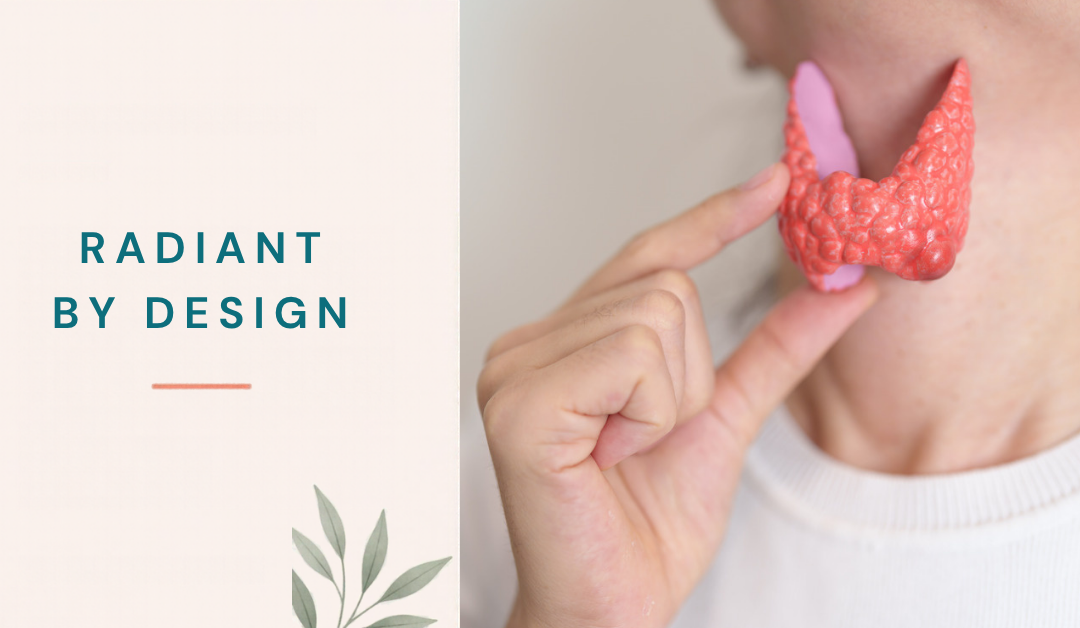
Can you have Hashimoto’s with a normal TSH? Yes. In the early stages of Hashimoto’s, thyroid antibodies may be elevated even when TSH and free T4 are within the normal range, according to the American Thyroid Association.
But what if your thyroid labs are normal and you still don’t feel like yourself?
I’m trained and certified as a physician assistant (PA-C) and trained with the Institute for Functional Medicine, and I believe it’s important to look beyond a single lab result and consider the whole picture. Your symptoms, health history, hormone changes, nutrition, sleep, and other factors can all offer clues about what may be going on.
Normal labs don’t automatically mean there’s nothing more to explore. And at the same time, symptoms alone don’t tell us that your thyroid is the problem. The goal is to understand what’s happening rather than jump to conclusions.
This article is for educational purposes only and is not a substitute for medical advice or care from your own clinician.
What Is Hashimoto’s, Really?
Hashimoto’s is an autoimmune condition in which your immune system targets your thyroid gland. Your thyroid is the small, butterfly-shaped gland at the front of your neck that produces hormones involved in metabolism, energy, temperature regulation, and the function of many organs throughout your body.
With Hashimoto’s, your immune system may produce antibodies against thyroid proteins, most commonly thyroid peroxidase (TPO) and thyroglobulin. Over time, the resulting inflammation can interfere with your thyroid’s ability to produce enough hormone.
A few things worth knowing:
-
Hashimoto’s is the most common cause of hypothyroidism, or an underactive thyroid, in the United States.
-
It is more common in women than men and often develops between ages 30 and 50.
-
Genetics and family history can play a role. Having another autoimmune condition, such as celiac disease or type 1 diabetes, can also increase your likelihood of developing Hashimoto’s.
-
The condition often develops gradually over many years. Some women have elevated thyroid antibodies long before their thyroid hormone levels become abnormal.
Sources: American Thyroid Association and National Institute of Diabetes and Digestive and Kidney Diseases.
Understanding this matters because Hashimoto’s and hypothyroidism are related, but they are not exactly the same thing. You can have evidence of autoimmune thyroid disease without currently having an underactive thyroid.
Can You Have Hashimoto’s With a Normal TSH?
Yes. This is one of the reasons looking at your TSH alone may not tell the whole story.
TSH, or thyroid-stimulating hormone, is produced by your pituitary gland. It signals your thyroid to produce thyroid hormones. It is an important first test for evaluating thyroid function, but it does not tell you whether thyroid antibodies are present.
For example, a woman may have elevated TPO antibodies while her TSH and free T4 remain within the laboratory reference ranges. This can be consistent with Hashimoto’s even though she does not currently have hypothyroidism.
If your thyroid hormone levels are normal, thyroid medication is generally not needed solely because your antibodies are elevated. However, your clinician may recommend monitoring your TSH over time because thyroid function can change.
In some cases, a thyroid ultrasound may also help clarify the picture.
You may hear the term subclinical hypothyroidism, too. This is different from having thyroid antibodies with otherwise normal thyroid function. Subclinical hypothyroidism generally means your TSH is elevated while your free T4 remains normal.
And if you’re pregnant or trying to conceive, thyroid evaluation requires additional consideration because pregnancy-specific thresholds and recommendations may apply. Be sure to discuss your individual situation with your clinician.
Why Can Your Thyroid Labs Be Normal When You Still Have Symptoms?
If you’re exhausted, struggling with brain fog, feeling unusually cold, or simply not feeling like yourself, I understand why being told that everything is normal can be frustrating.
But before assuming your thyroid is the answer, let’s look at what your results actually tell you, and what they don’t.
1. A TSH test doesn’t tell the whole story
TSH is an important starting point for assessing thyroid function. But it doesn’t measure thyroid antibodies, and it doesn’t tell us everything about your overall health.
Depending on your symptoms and medical history, your clinician may consider additional testing, including free T4 and thyroid antibodies.
Each test answers a different question. The goal isn’t to order every possible lab. It’s to understand which tests are appropriate for your situation and what the results mean when considered together.
2. Normal is not always the end of the conversation
Laboratory reference ranges are designed to help identify results that fall within an expected range for a given test. Those ranges can vary by laboratory and may be interpreted differently depending on your age, pregnancy status, and individual circumstances.
A result within the reference range is still considered normal. However, it doesn’t automatically explain why you’re experiencing fatigue, brain fog, or other symptoms.
This is where your health history and the context surrounding your results matter.
Rather than focusing on one number in isolation, I prefer to look at trends over time, symptoms, and the broader picture of what’s happening in your life.
3. Thyroid symptoms can overlap with other health concerns
Fatigue, difficulty concentrating, low mood, muscle aches, and feeling cold can occur with hypothyroidism, but they aren’t specific to thyroid disease.
Other factors may contribute, including iron or vitamin B12 deficiency, sleep problems, blood sugar concerns, stress, and hormonal changes.
This is why I don’t believe the answer is always to look harder at the thyroid. Sometimes the most helpful next step is to explore another piece of the puzzle.
4. Certain supplements and hormones can affect thyroid testing
A couple of things are worth mentioning when reviewing your results:
-
Biotin: Commonly found in hair, skin, and nail supplements, biotin can interfere with some thyroid laboratory tests. The American Thyroid Association advises stopping biotin for two days before thyroid testing, although you should confirm the appropriate timing with your clinician.
-
Estrogen and pregnancy: Birth control pills and pregnancy can affect thyroid-binding proteins and total thyroid hormone measurements. Your clinician can determine which tests are most appropriate for your situation.
The takeaway? Your results deserve to be interpreted in context, not simply labeled normal or abnormal without considering the rest of your story.
Which Thyroid Labs Should You Discuss With Your Doctor?
If you’re wondering which thyroid tests might be worth discussing, here’s a starting point. Not everyone needs every test, and the right approach depends on your symptoms, history, and previous results.
| Lab or test | What it helps assess |
|---|---|
| TSH | The signal from your pituitary gland that regulates thyroid hormone production. It is the recommended first-line test for most adults when thyroid disease is suspected. |
| Free T4 | The amount of unbound T4 hormone circulating in your blood. It is generally interpreted alongside TSH. |
| TPO antibodies and thyroglobulin antibodies | Help identify an autoimmune process consistent with Hashimoto’s. Antibodies are generally most useful when establishing the diagnosis; repeatedly checking their levels is not usually necessary. |
| Free T3 | Measures the unbound form of T3, an active thyroid hormone. I consider this in the context of a woman’s symptoms and other findings. |
| Reverse T3 | A metabolite of T4. The American Thyroid Association does not consider reverse T3 clinically useful for identifying hypothyroidism in otherwise healthy individuals. |
| Thyroid ultrasound | Evaluates the thyroid’s structure, size, and appearance. It may be considered when there is a structural concern or when the diagnosis remains uncertain. |
One distinction I want to make clear: my perspective on free T3 is not identical to conventional thyroid testing guidelines. In my work, I’ve seen women with hypothyroid-type symptoms whose free T3 levels fell below the range I personally look for. I’ve also seen some women’s levels change alongside lifestyle changes.
That is my experience, not proof that a low free T3 is necessarily causing symptoms or that lifestyle changes will produce a particular result. Free T3 must be interpreted carefully, and the appropriate testing and plan should be discussed with your clinician.
Remember, the goal isn’t to chase lab numbers. It’s to understand your health and make informed decisions about your care.
Thyroid labs are only one piece of the puzzle, so I made a free checklist with a broader list of labs you may want to talk through with your doctor when you’re tired and everything comes back “normal.”
Get the free Normal Labs checklist
Still Tired While Taking Levothyroxine?
If you’re already taking thyroid medication and still don’t feel like yourself, you’re not alone. Some people continue to experience symptoms even when their TSH is within the target range.
That doesn’t automatically mean your medication isn’t working or that your dose needs to be increased. It means there may be more to investigate.
Consider medication timing and absorption
Levothyroxine needs to be taken consistently according to your clinician’s instructions. The timing of food, coffee, and certain supplements can affect how much medication your body absorbs.
Iron and calcium supplements, for example, can interfere with absorption when taken too close to levothyroxine. Your doctor or pharmacist can help you determine the appropriate timing.
After a dose adjustment, thyroid levels are generally reassessed after approximately six to eight weeks.
Please don’t stop your medication or change your dose on your own. Those decisions should always be made with the clinician managing your thyroid care.
What if your TSH is normal but you still have symptoms?
Levothyroxine remains the standard treatment for hypothyroidism. Research has not consistently demonstrated that alternative approaches or combination T4/T3 therapy are superior for everyone.
However, research also recognizes that some people continue to experience symptoms despite treatment.
When that happens, it may be worth discussing other potential contributors with your clinician, including anemia, additional autoimmune conditions, sleep problems, mood concerns, and other health issues.
The point is not to dismiss your symptoms or assume the medication has failed. It’s to take a thoughtful approach to understanding what else may be contributing.
Look beyond the thyroid
Your thyroid is one part of a much bigger picture. Depending on your symptoms and health history, other areas worth exploring with your clinician may include:
-
Iron status and vitamin B12: Deficiencies can contribute to fatigue and weakness.
-
Vitamin D and blood sugar: These may be relevant depending on your medical history and individual risk factors.
-
Sleep quality: Getting enough hours of sleep doesn’t always mean you’re getting restorative sleep. Sleep apnea and other sleep disturbances can contribute to persistent exhaustion. You can read more in my article on why you can feel exhausted even when you sleep.
-
Hormonal changes: Pregnancy, the postpartum period, and perimenopause can bring changes that affect how you feel. Learn more about postpartum hormone support and hormonal changes in exhausted moms.
-
Stress and your nervous system: Your life circumstances, emotional well-being, and ability to rest can all be part of the picture. I explore this further in my article on nervous system-informed functional medicine.
These aren’t boxes to check simply because you’re tired. They’re areas to consider based on your individual circumstances.
When we slow down and look at the whole picture, we can have a more meaningful conversation about what your body may need.
What Is an Optimal TSH for Women?
If you’ve spent time researching thyroid health online, you’ve probably come across the term optimal thyroid range.
Here’s where I want to be transparent: there is no universally agreed-upon optimal TSH number for every woman. Conventional guidelines generally use the laboratory reference range, interpreted in the context of the individual.
In my functional medicine training, I learned to consider narrower ranges when reviewing thyroid labs. In my own practice, I have preferred to see TSH below 2 and free T3 between 3 and 4 pg/mL.
These are my personal preferences, not established targets or universally accepted medical standards. Your clinician may interpret your results differently, and a number outside these preferred ranges does not automatically mean something is wrong or that medication is necessary.
When I review labs, I don’t want to get caught up in one number. I want to understand how your results relate to your symptoms, your health history, and the changes you’ve experienced over time.
A lab result is information. It is not your identity, and it is not the entire story of your health.
For more on this topic, read why normal and optimal labs aren’t always the same conversation.
Does Diet Matter for Hashimoto’s?
Food is one of the ways we care for the bodies God has entrusted to us. But when it comes to Hashimoto’s, I believe we need to approach nutrition with both curiosity and discernment.
There is no single diet that has been proven to resolve Hashimoto’s for everyone. Restricting more foods isn’t automatically better, and you don’t need to live in fear of getting your diet wrong.
Here are a few nutrients and dietary considerations worth understanding.
Iodine
Your thyroid needs iodine to produce thyroid hormones. But more isn’t necessarily better.
People with Hashimoto’s may be particularly sensitive to excess iodine, including from kelp, seaweed concentrates, and iodine supplements.
Pregnancy brings additional considerations because iodine requirements change. Talk with your clinician before supplementing, especially if you’re pregnant, trying to conceive, or have a known thyroid condition.
Selenium
Selenium plays a role in thyroid hormone metabolism. Some studies have found that selenium supplementation can lower TPO antibody levels, while others have not demonstrated consistent improvements in thyroid function or quality of life.
Lowering an antibody number doesn’t automatically mean that symptoms will improve or that disease progression will change.
Selenium supplementation is not appropriate for everyone, and too much can be harmful. Discuss whether supplementation makes sense for you with your clinician. Pregnant women with positive TPO antibodies should be particularly careful to follow current guidelines.
Gluten
Hashimoto’s is more common in people with celiac disease, an autoimmune condition triggered by gluten.
If you suspect celiac disease, talk with your clinician about testing before eliminating gluten, because a gluten-free diet can affect test results.
Outside of celiac disease, the evidence supporting a gluten-free diet for every person with Hashimoto’s remains limited.
In my own experience, I’ve worked with women whose TPO antibody levels decreased after switching to a gluten-free diet. That is an observation from my practice, not proof that gluten was responsible or that everyone with Hashimoto’s will benefit.
I don’t believe every woman needs to eliminate gluten. I believe we should look at the individual, consider the evidence, and make thoughtful decisions rather than follow a restrictive diet simply because someone online says we should.
If you have a history of disordered eating, discuss dietary changes with your clinician and a registered dietitian who can help you protect your nutritional and emotional well-being.
Vitamin D
Vitamin D is involved in immune function, and researchers continue to investigate its relationship with autoimmune thyroid disease. However, evidence does not currently establish a specific vitamin D supplementation protocol for Hashimoto’s.
If you’re concerned about your vitamin D status, ask your clinician whether testing or supplementation is appropriate for you.
Start with the basics
Sometimes, supporting your health starts with simple, consistent habits: eating adequate protein, including a variety of fiber-rich foods, staying hydrated, and choosing nourishing meals that work for your body.
These habits aren’t a way to get rid of Hashimoto’s, and they don’t replace appropriate care from your doctor. They’re a foundation for caring for your health without turning food into another source of stress.
What Does a Functional Medicine Approach Add?
This is where functional medicine can be helpful.
For me, functional medicine is a way to take a step back and look at the whole person rather than focusing on a single symptom or lab result.
It doesn’t mean conventional medicine is wrong, and it doesn’t mean every symptom has a hidden root cause waiting to be uncovered. It means taking the time to ask thoughtful questions, understand the bigger picture, and consider what may be contributing to how you feel.
A functional medicine approach may include:
-
Time to tell your story. Your symptoms, health history, and lived experience matter.
-
A broader health history. Your menstrual cycles, pregnancies, postpartum experiences, sleep, digestion, stress, nutrition, and family history can all provide useful context.
-
Thoughtful lab discussions. Additional testing may be appropriate depending on your symptoms and what has already been evaluated.
-
Lifestyle and nutritional support. Nutrition, sleep, movement, stress management, and targeted supplementation when appropriate can be part of a comprehensive plan.
-
Care for the whole person. Your physical health matters, but so do your emotional well-being, spiritual life, and the circumstances you’re navigating.
As a Christian, I also believe caring for our bodies is an expression of stewardship. We can pursue answers, seek appropriate care from our doctors, and make thoughtful changes without allowing fear to lead the process.
Our bodies are not machines we can control perfectly. And our health is not a measure of our worth or our faith.
A functional medicine approach can complement care from the clinician managing your thyroid condition. It does not replace thyroid medication when medication is needed, and results vary from person to person.
My one-on-one work is 100% virtual, and I work with women across the United States and internationally. I offer lifestyle, supplement, and faith-integrated guidance, with prayer and Scripture when desired, alongside the clinician managing your thyroid care.
If you’d like to learn more, you can explore working with a functional medicine practitioner for women or see how working with me works.
When the Waiting for Answers Feels Heavy
I want to leave you with something beyond your lab results.
When you don’t feel well and can’t seem to get clear answers, it can be exhausting. You may find yourself wondering whether you’re missing something, whether you need another test, or whether you’ll ever feel like yourself again.
I understand the desire to find answers. I’ve spent years learning about health and searching for answers myself, and that experience has shaped how I approach the women I work with.
But I’ve also learned that caring for our health is about more than finding the perfect lab result or making every symptom disappear.
You are a whole person, created with intention. Your worth is not determined by your symptoms, your lab values, or how much you can accomplish in a day.
We read in Matthew 11:28 (NLT), “Then Jesus said, ‘Come to me, all of you who are weary and carry heavy burdens, and I will give you rest.’”
That invitation is for you in the middle of the uncertainty, too.
You can bring your questions and frustrations to God. You can ask Him for wisdom and discernment as you seek answers. You can advocate for your health and work with your clinician to determine the next appropriate step.
You don’t have to choose between faith and talking with your doctor. And you don’t have to figure everything out today.
Caring for your body is stewardship, not a test you pass or fail.
Frequently Asked Questions
Can you have Hashimoto’s with a normal TSH?
Yes. Thyroid antibodies can be elevated even when TSH and free T4 are within their reference ranges. This can be consistent with Hashimoto’s without current hypothyroidism. Your clinician can help determine whether additional evaluation or periodic monitoring is appropriate.
Why do I still have symptoms when my thyroid labs are normal?
Fatigue, brain fog, feeling cold, and other symptoms can have many causes. Depending on your circumstances, iron or B12 deficiency, sleep problems, blood sugar concerns, hormonal changes, stress, and other health conditions may contribute. A thorough history and appropriate follow-up with your clinician can help clarify the next steps.
Which thyroid tests should I ask my doctor about?
TSH is generally the first-line test for evaluating thyroid function. Depending on your history and symptoms, your clinician may also consider free T4, TPO and thyroglobulin antibodies, or a thyroid ultrasound. Free T3 and reverse T3 have limitations and are not recommended by the American Thyroid Association as routine tests for diagnosing hypothyroidism. Discuss which tests are appropriate for your individual situation.
Is there an optimal TSH range for women?
There is no universally accepted optimal TSH target for every woman. Conventional guidelines generally use the laboratory reference range, with adjustments for individual circumstances such as pregnancy. In my practice, I have personally preferred TSH below 2 and free T3 between 3 and 4 pg/mL, but these are my preferences rather than established medical standards. Your results should be interpreted in context with your clinician.
Why am I still tired on levothyroxine?
Persistent fatigue can have several explanations, including medication absorption issues, a dose that needs reassessment, anemia, sleep disturbances, or other health concerns. Your clinician can help evaluate potential contributors. Never change your medication dose without consulting the clinician managing your thyroid care.
Should I go gluten-free if I have Hashimoto’s?
Not necessarily. Gluten avoidance is important for people with celiac disease, but evidence supporting a gluten-free diet for everyone with Hashimoto’s is limited. In my experience, some women have experienced lower TPO antibody levels after eliminating gluten, but this doesn’t establish that gluten was the cause or that everyone will benefit. If celiac disease is a possibility, seek testing before eliminating gluten.
Can functional medicine help with Hashimoto’s?
Functional medicine may help you and your healthcare team explore factors beyond your thyroid labs, including nutrition, sleep, stress, and other potential contributors to your symptoms. It can complement conventional thyroid care but does not replace medication when medication is needed. The appropriate approach and results will vary from person to person.
Your Next Step
If you’re still struggling with symptoms despite normal labs, I want to encourage you not to dismiss what you’re experiencing—but also not to assume that your thyroid is necessarily the answer.
There may be more to understand, and you can take the next step without feeling like you need to solve everything at once.
Start by gathering your symptoms, health history, and previous lab results. Bring your questions to your clinician and have a conversation about what makes sense to explore next.
If you’d like a simple place to start gathering all of that, my free checklist has a 14-day symptom tracker and questions you can bring to your next appointment.
And if you’d like support looking at your health through a functional medicine and faith-integrated perspective, you can learn how working with me works and book a Connection Call.
You don’t have to navigate every question alone. Take the next wise step, give yourself grace along the way, and remember that your health journey is just one part of the story God is writing in your life.
Please seek prompt medical evaluation for new swelling in your neck, difficulty swallowing or breathing, or symptoms that worsen rapidly. Call 911 for a medical emergency.
This article is for educational purposes only and is not a substitute for medical advice or care from your own clinician. Every person is different. Consult your healthcare professional before changing your medication, supplements, or plan.